
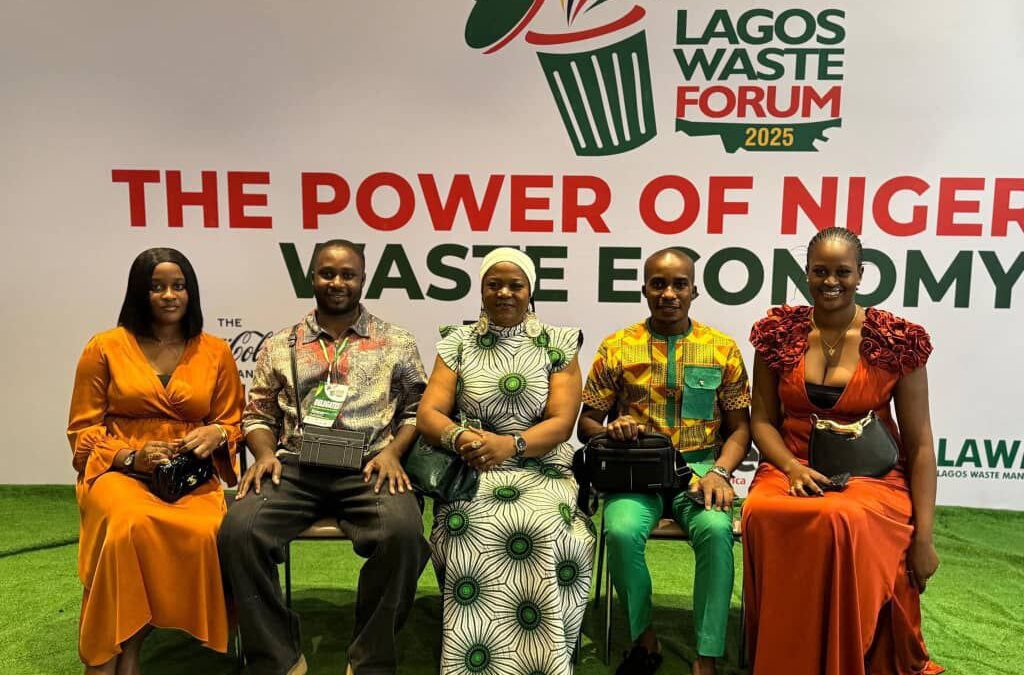
The 6th edition of the Lagos Waste Forum concluded with a powerful consensus: waste is no longer Nigeria’s problem, but its untapped goldmine. Held on December 2nd and 3rd, 2025, at the Radisson Blu in Ikeja, the forum, themed “The Power of Nigeria’s Waste Economy,” brought together an unprecedented assembly of policymakers, global development partners, industry leaders, and grassroots innovators to chart a path toward a circular future.
The forum commenced promptly at 10:30 AM on December 2nd, anchored by the Director-General of the Imo State Broadcasting Corporation, Chief Ify Onyegbule, who led the national anthem and introduced a hall filled with dignitaries. His Excellency, Governor Babajide Olusola Sanwo-Olu, was ably represented by his Special Adviser on Environment, Engr. Olakunle Rotimi-Akodu. The event’s significance was underscored by the presence of key figures including Dr. Muyiwa Gbadegesin (MD, LAWMA), Titi Oshodi (Special Adviser on Climate Change and Circular Economy to the Lagos Governor), Dr. Ola Oresanya (Commissioner for Environment, Ogun State), Professor Chinwe Obuaku-Igwe (Director-General on Climate Change, Osun State), and representatives from the United Nations Industrial Development Organization (UNIDO) and the Kingdom of the Netherlands.
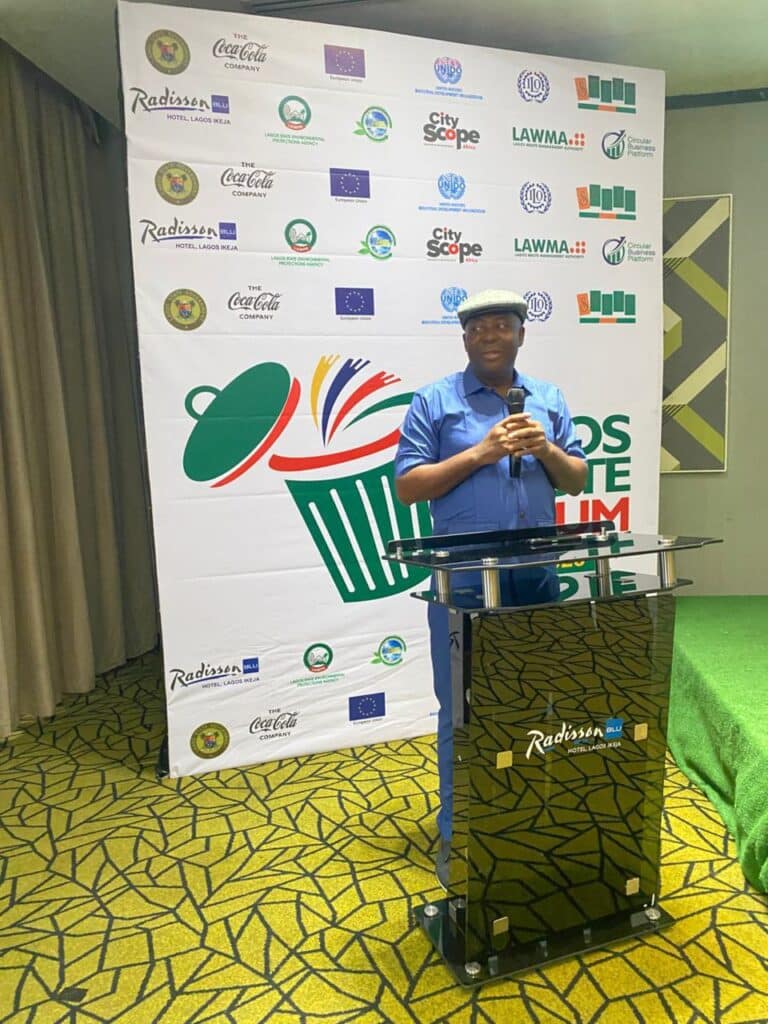
The President and CEO of the SWEEP Foundation, Ambassador Phillips Ozoemena Obuesi, set the tone with his welcome address. Reflecting on the forum’s six-year journey, he framed dumpsites not as endpoints, but as “waste mines” —sources of recoverable and valorized resources. In a visionary proposal, he suggested that given Lagos is 35% water, a standalone Ministry of Water Resources could make way for a possible Ministry of Waste Resources, institutionalizing waste as a strategic, revenue-generating sector for the state.
A series of goodwill messages followed, reinforcing the collaborative spirit. Engr. Rotimi-Akodu, representing the Governor, delivered a pivotal address aligning with the state’s T.H.E.M.E.S+ Agenda. He declared that “waste is no longer something we discard. It has become wealth we recover,” highlighting the establishment of the LAWMA Academy as a cornerstone for professionalizing the sector. In a forward-looking statement, he expressed his commitment to championing Lagos Waste Forum to “Lagos International Waste Forum” as a successor to elevate the discourse globally.
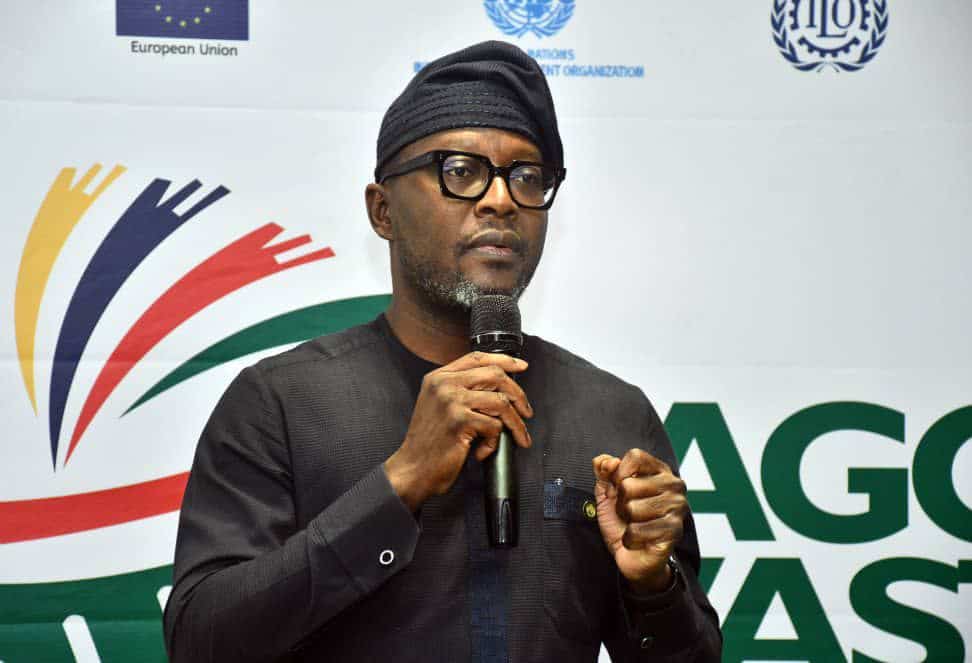
The keynote lecture, delivered by Dr. Ola Oresanya, was a masterclass in bridging theory with stark economic reality. His thesis, “The gap between problem and prospect, is knowledge,” was illustrated by the jarring fact that while Ogun State recycles over 1,400 metric tons of plastic daily, 85% of the recycling plants are foreign-owned. He lamented the export of raw waste and the import of finished products, framing it as a crisis of knowledge and value capture. Dr. Oresanya emphasized the non-negotiable need for data” What you cannot measure, you cannot manage” revealing that credible, globally recognized waste data exists only for Lagos and Abuja. He broke down the economics: a $160 million annual market just to transport Nigeria’s 32 million tons of waste, requiring an estimated 1,200 daily truck trips in Lagos alone. He concluded with a stern warning against politicizing waste management and a call for professional competence at all levels.
Corporate and international partners outlined their actionable commitments. Mrs. Nwamaka Onyemelukwe, Senior Director at Coca-Cola Nigeria, reframed the narrative, stating “Waste is not the end of a product’s journey—it is the beginning of a new life for raw materials.” She announced the launch of a new Packaging Collection Hub in Apapa, capable of processing 13,000 metric tonnes of PET annually, as the first of six planned hubs in Nigeria. Emem Umana, representing UNIDO Director and representative to ECOWAS, Ambassador Philbert Abaka Johnson, reinforced that waste is a “vast, untapped economic resource.” She detailed the EU-funded project “Advancing Nigeria’s Green and Just Transition to Net Zero,” which includes supporting the development of a National Policy for Off-Grid Renewable Energy Equipment (OGREE) Waste Management.
The day featured two deep-dive technical panel sessions: “Valorization of Agricultural Waste,” moderated by Dr. Sarumoh M. Bolu of the Lagos Ministry of Agriculture, and “Circular Business Models for Industrial & Fashion Waste,” moderated by Mrs. Funke Adekoya of LASEPA. A virtual presentation by Nahomi Nishio of UNIDO further elaborated on integrating circular economy practices into managing off-grid renewable energy equipment.
Day Two, anchored again by Chief Ify Onyegbule, began with an insightful recap by the Forum Coordinator, Dr. Olajumoke Joseph, before delving into more specialized topics.
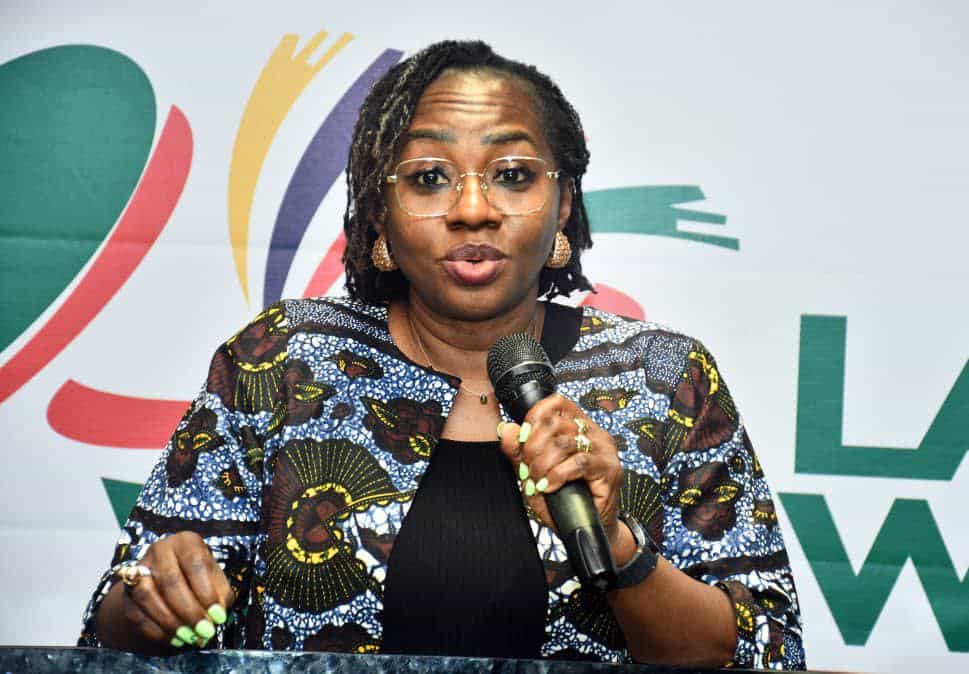
Her Excellency, Dr. (Mrs.) Claudiana Ibijoke Sanwo-Olu, the First Lady of Lagos State, represented by Mrs. Abimbola Odunmbaku, delivered a powerful goodwill message. She reminded the audience that “every conversation about waste is fundamentally a conversation about life,” linking environmental health directly to the wellbeing of women and children. She shared practical insights from her initiatives, including market clean-ups with wives of state officials, underscoring that community mobilization and changing everyday habits are critical to the mission.
The day’s technical highlight was a groundbreaking lecture by Engr. Oladele Fadipe, FNSE, MD/CEO of El-Fad Concept, on “Circular Economy Strategies for Fecal Waste Management.” He dismantled taboos with hard economics, presenting fecal sludge as a valuable resource for biogas, nutrient-rich compost, and treated water. Citing successful models like Dakar’s “Fortifer” compost and Kampala’s biogas systems, he argued for holistic circularity where everything is a nutrient for another cycle. His presentation on Copenhagen’s success in slashing per-capita emissions by over 70% served as a potent benchmark.
Goodwill messages from grassroots champions added essential perspective. Comrade Friday Oku, President of the Association of Scraps and Waste Pickers of Lagos, Arese Lucia Onaghise of the Food and Beverage Recycling Alliance (FEBRA), and Ibukun Faluyi of the E-waste Producer Responsibility Organization of Nigeria all spoke, highlighting the critical role of informal sector integration and producer responsibility in building a functional waste economy.
The forum concluded with two final panel sessions: “Driving Improved Construction Waste Management,” moderated by Dr. Essien Nsuabia of LAWMA, and “Circularity of Fecal Waste for Economic Empowerment,” moderated by Dr. Hassan Sanuth of the Lagos Office of Environment and Water Resources.
The consensus from the two-day forum is that inspiration must now turn to transformation. To mainstream the circular economy, a multi-pronged assault on ignorance and inaction is required:
1. Launch a Dedicated Waste-Economy Media Program to demystify the business and shift public perception from shame to opportunity.
2. Institutionalize Education & Skills Development, integrating circular economy modules into curricula and offering vocational training through the LAWMA Academy.
3. Execute Grassroots Mobilization by empowering Local Governments as living laboratories for tailored pilot projects, like a “Portside Material Recovery Hub” in Apapa or “Community Composting” in Surulere.
4. Rebrand the Sector by engaging cultural influencers to change the narrative from “scavenger” to “Environmental Entrepreneur,” supported by annual “Green Champion” awards.
5. Establish a Supportive Financial Architecture, including a Green Bank with single-digit loans, “Pay-for-Success” bonds, and fully operational Extended Producer Responsibility (EPR) schemes.
The Lagos Waste Forum 2025 served as a massive infusion of the critical knowledge needed to bridge the gap between our waste problem and its prosperous potential. We are not a poor nation buried in garbage, but a rich one sitting on a misplaced fortune. The path is clear: we must stop exporting raw waste only to import finished products. We must build the ministries, industries, and platforms that will fuel Nigeria’s Waste Revolution. The question is no longer one of possibility, but of collective will. Will we remain raw material exporters in the global circular economy, or will we rise to become its manufacturers, innovators, and owners?
The forum was organized by the SWEEP Foundation and supported by partners including the Lagos State Government, UNIDO, the European Union, and The Coca-Cola Company.
By Casmir Ozuruigbo.
Good job you all. We will become manufacturers, innovators and owners. Our efforts will not be in vain. Work on the communities of the forum for perfect performance